Creating Depth, Presence, and Transformation Online
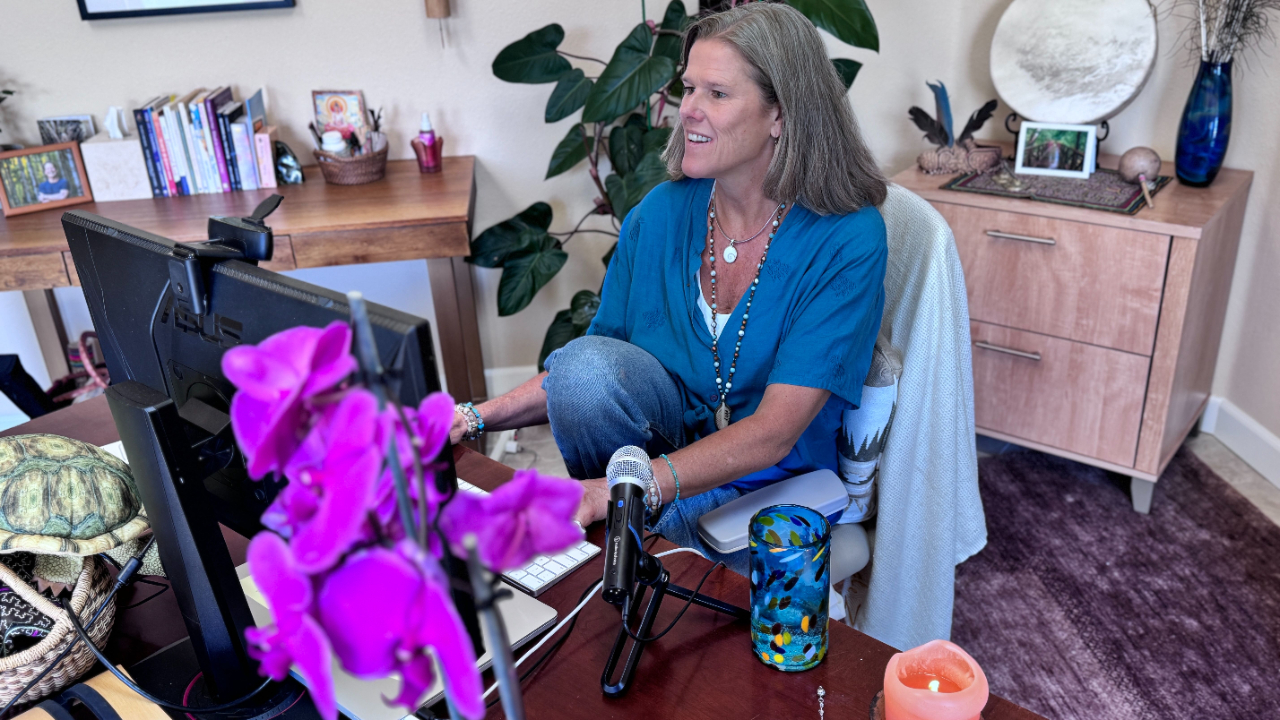
I’ve always approached online training as an intimate, interactive experience.
From the very beginning, my interest was never in broadcasting information. It was in creating connection, dialogue, and real learning—no matter the medium.
I began this work in 2001, facilitating training via a telephone conference software platform. There were no screens, no slides, no visual cues—just voice, pacing, listening, and trust. What surprised many people then, and still surprises some now, is how deeply connected those spaces could be.
Because intimacy isn’t created by technology, it’s created by presence.
As technology evolved, so did the possibilities
As tools became available, I leaned in—not to replace relational learning, but to deepen it.
I pioneered online–hybrid models within community college courses, blending in-person learning with online engagement long before it was common. In 2010, I introduced webinars to our local economic development center, helping small business owners and entrepreneurs learn in ways that were accessible, human, and practical.
With each technological advance—video, chat, breakout rooms, collaborative tools—the question was never “What can this platform do?”
It was always “How can this serve connection, participation, and empowerment?”
As technology allowed for more interaction, I used it to invite more engagement, more reflection, and more shared meaning.
One of the most consistent truths I’ve observed over decades of facilitation is this: how the facilitator shows up energetically sets a tone for everyone.
If a facilitator is rushed, controlling, or overly attached to outcomes, that tension is felt. And when a facilitator is grounded, receptive, and attuned, people rest into learning and growing together.
What carries the learning space is the facilitator’s inner posture—their capacity to listen, track the group, and stay present with what’s unfolding.
The question becomes less about managing attention and more about tending the collective.
Facilitation is energetic before it is technical.
Of course, technical skill matters. Knowing how to use chat, breakout rooms, timing, transitions, and clear instructions makes a real difference.
And those skills rest on something more profound. In my experience, the most effective online facilitators share a few qualities:
- they are embodied and regulated
- they are not performing or proving
- they trust the intelligence of the group
- they allow themselves to be influenced by what emerges
This is where feminine energy in facilitation becomes especially relevant.
Feminine energy in facilitation is not about gender. It’s about an intuitive, empathic flow.
It values receptivity over domination.
Listening over directing.
Emergence over control.
It allows silence to do its work.
It trusts timing rather than forcing momentum.
It creates safety without collapsing into passivity.
Online spaces respond beautifully to this quality of leadership. When facilitators slow down, participants settle. When facilitators listen deeply, people feel invited rather than managed.
Much of my facilitation—online and in person—takes the form of circles or roundtable-style conversations.
Everyone is visible.
Everyone has access to share.
No one is positioned as “above" or at the head of the table.
In an online circle, this might look like:
- a clear opening that orients the group
- a shared inquiry offered to everyone
- the option for each person to speak, pass, or reflect
- the facilitator tracking time, tone, and safety rather than content
The facilitator isn’t responding to every share. They’re not fixing or interpreting. They’re holding coherence. And, they're participating.
What often happens is subtle but powerful: people begin responding to one another. Themes emerge organically. Insight builds collectively.
People feel both individual and connected. That’s the intelligence of the circle at work.
Structure creates freedom. This is where the healthy masculine energy serves the whole.
One misconception about relational or soulful facilitation is that it should be loose or unstructured. In reality, structure is what allows depth to happen safely.
Clear timing, transparent processes, boundaries, and simple instructions reduce anxiety. They free participants from wondering what’s expected, so they can be present with what’s real.
I think of structure as the riverbanks.
Without them, the water disperses.
With them, it can move powerfully.
Mastery in facilitation is knowing when to hold structure firmly—and when to soften it.
The facilitator is a companion and a way-shower, not an authority.
Over the years, one of the biggest shifts in my own facilitation has been letting go of the need to be “the one who knows.”
People today aren’t looking for someone to follow unquestioningly. They’re looking for spaces that help them access their own inner authority.
Facilitating online—especially now—asks us to model equality, not hierarchy. Presence, not performance. Sovereignty, not dependence. The facilitator becomes someone who demonstrates how to be with complexity, difference, and emotion.
Not by having all the answers. But by staying connected while the questions unfold.
For me, online facilitation has never been a compromise.
From teleconferences to hybrid classrooms to interactive video-based circles, the through-line has always been the same: honoring people as intelligent, whole, and capable of contributing to shared meaning.
Connection is not created by proximity. It’s created by presence.
Mastering the art of online facilitation isn’t about learning a platform.
It’s about mastering pacing, listening, and trust. It’s about being willing to be changed by the very spaces we’re holding.
When that happens, the screen disappears.
And what remains is what’s always mattered most:
Human beings, learning and becoming—together.
Let’s keep the conversation going
Newsletters come with gentle insights, practical tools, and grounded reflections — all designed to support you in living, loving, and leading in alignment with soul.